The problem with perfect
There’s a certain hush that falls over the table at a Michelin wine dinner, the kind that makes you instinctively lower your voice and sit up straighter. White tablecloths so crisp they could draw blood, seven glasses lined up like crystal soldiers, and a parade of silver-domed plates landing in front of each guest with military precision. The sommelier gives tasting notes like a TED Talk, and everyone nods along as if they’ve actually caught that “crushed river stone” note. Truth is, most of us are just tasting… exhaustion.
For all their ceremony and polish, these dinners often miss what they claim to celebrate: the unpretentious joy of wine. Great wine doesn’t need synchronized sipping or long speeches about soil pH — it needs conversation, curiosity, and maybe a bit of chaos. Somewhere along the way, the Michelinized idea of “perfect pairings” turned drinking wine, one of life’s simplest pleasures, into something that feels suspiciously like homework.
The rise of the “scripted sip”
Once upon a time, wine dinners were actually exciting. You’d go to a small restaurant, meet the winemaker, and taste bottles you couldn’t find anywhere else. But as luxury culture became industrialized, the wine dinner turned into a formula — an elaborate production scripted down to the sip. Like most things that get too polished, the soul quietly slipped out the back door.
I once went to a winemaker dinner featuring a legendary Burgundy paired with lamb. It was perfect on paper. Then, mid-course, someone accidentally poured that same Pinot Noir with the next dish — roast duck with plum sauce — and the transformation was electric. The wine, previously shy, turned playful. The table came alive. Laughter replaced polite murmurs. It was the first unscripted moment of the night, and of course, it wasn’t part of the plan.
“These dinners are engineered for perfection, not pleasure — and those two things don’t always overlap.”
The tyranny of the pairing chart
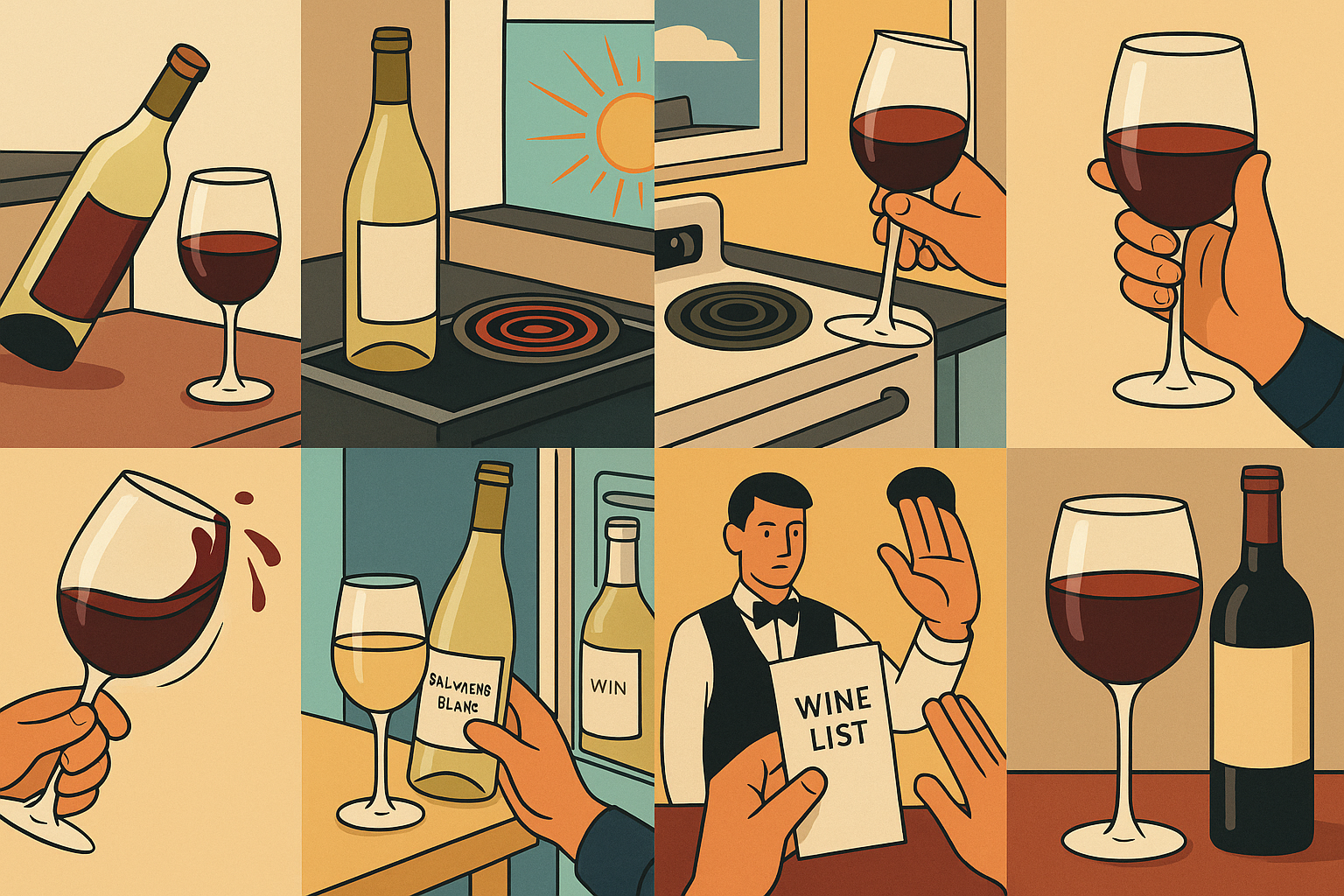
We’ve all heard the gospel: red with meat, white with fish. But wine doesn’t care about your rules, and neither should you. Flavor isn’t static; it changes with temperature, mood, seasoning, and even the company you’re in. A delicate Pinot that sings on a rainy evening might fall flat in tropical heat. A crisp Sancerre might be magic with a hot curry — something no pairing chart would ever suggest.
Chilled Beaujolais with spicy tacos. Champagne with fried chicken. Smoky barbecue ribs with a bright Sancerre. Technically “wrong,” yet full of personality. Even sommeliers will quietly tell you that pairing is as much about emotion as chemistry. If you love Malbec and you’re eating oysters, maybe you don’t need to switch to Muscadet. Maybe you just need a good friend, a breeze, and two clean glasses.
Real life isn’t a tasting menu
For most of us, dinner looks like last-minute pasta, a leftover roast, or something eaten in front of Netflix. Yet those are the meals that often create the real wine memories. A random Tuesday when someone opens a dusty bottle from a cabinet. A pizza night where someone, against all logic, brings Barolo. A humid barbecue where the only chilled thing left in the cooler is a fancy Bordeaux — and it somehow works.
There’s something magical about low-stakes drinking. When no one’s judging, you actually taste more. Not because your palate’s sharper, but because your guard’s down. Real-life wine experiences reward curiosity, not correctness.
Build your own “Chaotic Pairing Night”
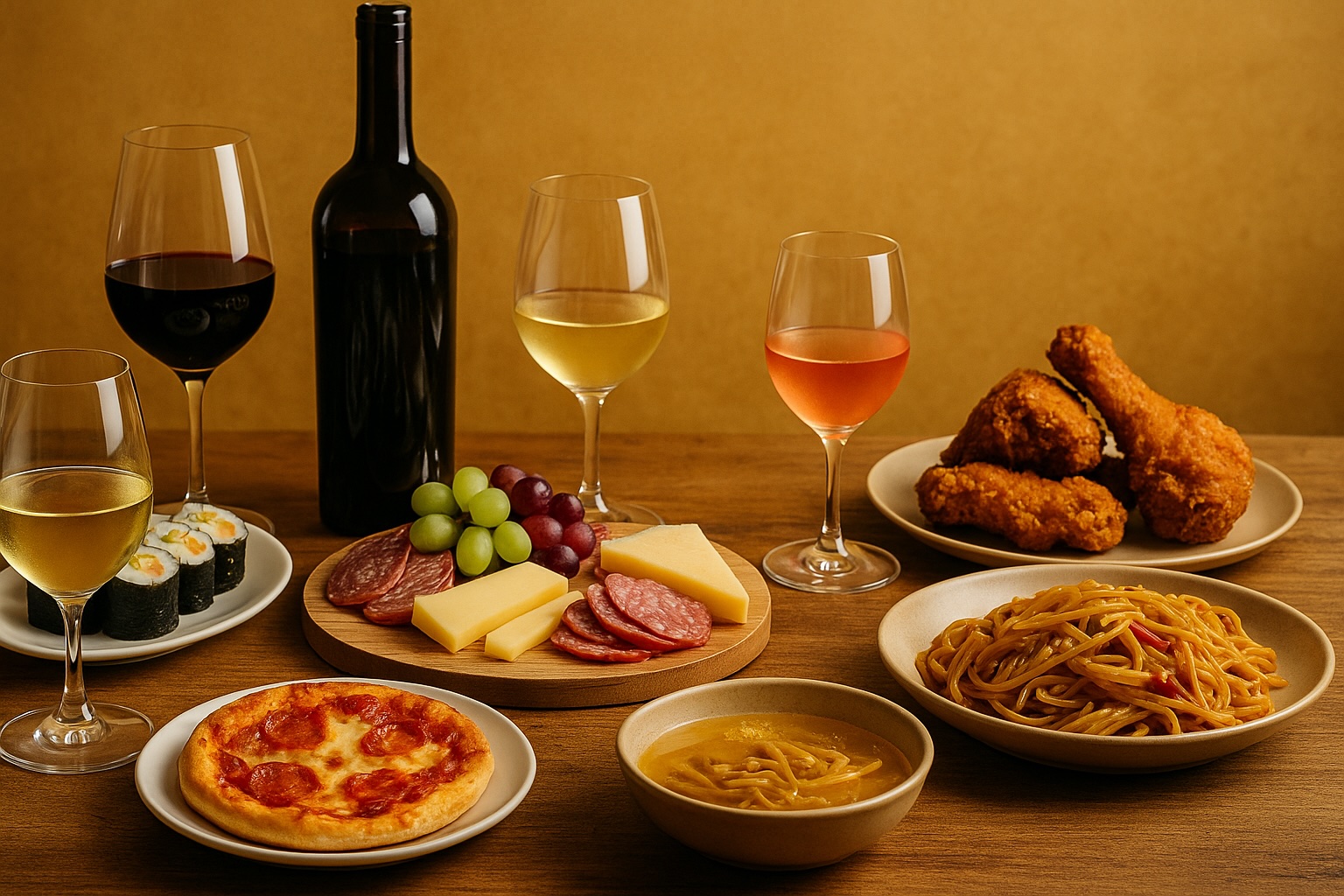
So how do you bring the fun back? Ditch the courses. Invite a few friends and tell them to bring one bottle each — no coordination, no theme. Order food without planning the pairings: pizza, sushi, fried rice, cheese plates, fried chicken, whatever fits. Then just play. Pour randomly. Mix things up. After each pairing, have guests pick the card that best describes how it felt:
It just works; you’re grinning.
Weird at first, then you love it.
Reliable, cozy, crowd-pleasing.
Odd, weird, but kinda great.
Two big personalities making each other better.
This shouldn’t work, but it really does.
If you want a bit more structure, turn it into rounds: start with The Rule Breaker (deliberately defy a pairing rule), follow with The Curveball (a mystery bottle poured blind, described by how it feels), and finish with The Perfect Blend (traditional pairings like Pinot with duck). Compare results and see which pairings actually make people happiest.
The prestige trap
Here’s the secret: most wine dinners aren’t about wine. They’re about status. Who brought the rare magnum? Who can pronounce the French village correctly? It’s exhausting. The best winemakers — the ones who actually care — drink with pizza, sausages, whatever’s around, because context and company always beat price tags.
Wine was supposed to be fun
Wine’s always been about connection — that spark across a table, a couch, a campfire. It never needed approval to be special. So next time you’re steered toward a high-gloss, high-stress dinner, smile, sip politely, and then go home and throw your own. Open anything, order whatever, forget the rules. Because if your dinner feels like homework, you’re drinking it wrong.