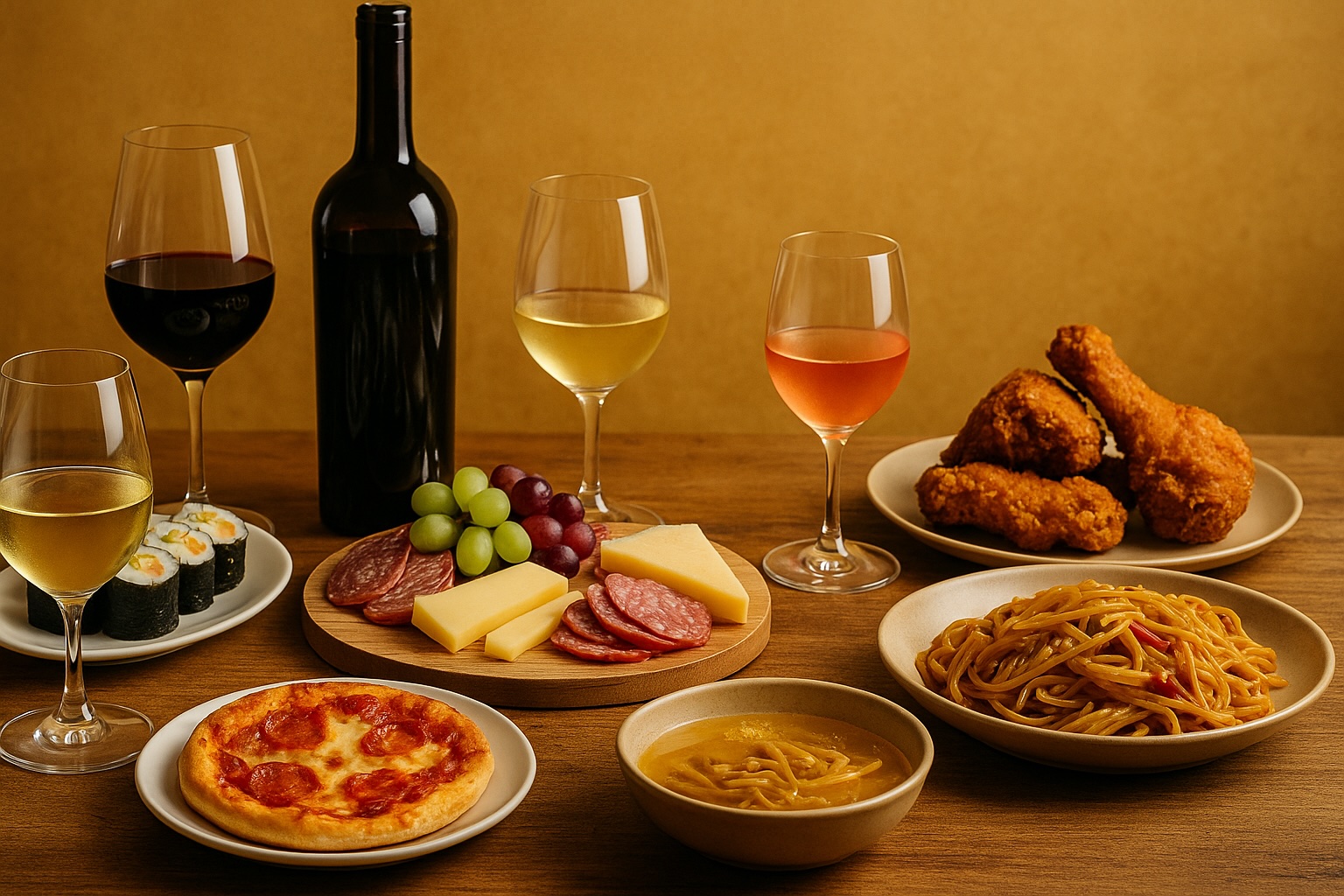
Welcome to the brave, bubbling world of culinary diplomacy, where sushi burritos, gochujang spaghetti, and tacos al pastor with kimchi now show up not just on food trucks but on fancy tasting menus at restaurants with far too many forks. It’s a buffet without borders, a playground where chefs remix centuries of cooking tradition like DJs on an international tour. Somewhere between a Paris bistro, a Seoul barbecue joint, and a California vineyard, one realization quietly settles in: fusion isn’t new. We’ve just stopped pretending it’s experimental.
But here comes the tricky question. What happens to wine when the food doesn’t belong to one place anymore?
Because for all of wine’s romance and poetry — the terroir, the tradition, the oak barrels and minerality — wine has always been rooted in the idea of place. It’s what happens when geography, grapes, and culture fall in love. But today the map has changed. We live in a world where your dinner might have three passports and an accent you can’t place, and the poor wine bottle just has to keep up.
When terroir gets confused
Terroir is one of those words that wine people practically whisper. It means soil, sunlight, slope, and somehow also soul. For centuries, the wisdom was simple: Tuscan wine with Tuscan food, Burgundy with coq au vin, Rioja with jamón. If two things grew up side by side, they’d probably get along — like neighbors who know each other’s dogs by name.
But the world doesn’t look like that anymore. A chef might reach for miso, harissa, and maple syrup in a single breath. And when those dishes land on the table, traditional wine pairings start to crumble. You can’t expect Chablis to know what to do with Szechuan peppercorn. The comforting logic of “local wine for local food” collapses when your dinner insists on being multicultural.
The awkward first date between wine and fusion cuisine
Wine hasn’t always handled this new dating scene gracefully. Picture an oaky California Chardonnay with spicy Korean barbecue — the wine shows up creamy and full of confidence, only to wilt under gochujang heat. Or a serious Bordeaux, proud and tannic, facing down a bright Thai green curry. The curry cracks a smile and wipes the floor with it. There are three big troublemakers:
Chili heat amplifies alcohol. A big Shiraz or Zinfandel will make your tongue feel like it’s under attack — the higher the ABV, the sweatier you get.
Citrus, vinegar or kimchi can make softer wines taste dull. If the wine can’t keep its edge, it just feels flabby and lifeless.
The savory depth of mushrooms, miso or soy sauce is amazing for food but tough on tannins — it can make reds taste bitter and whites weirdly sweet.
The unexpected marriages
Every now and then, a combination that seems destined for failure turns into a perfect partnership:
High acidity and just enough sweetness to soothe the spice and balance the salt. It cools the fire and lifts the funk.
Earthy skin contact and tropical tones mirror lemongrass and galangal perfectly. A conversation that shouldn’t flow — and yet it does.
The fizz slices through the grease, the fruit matches the glaze. Indulgent and refreshing at once.
Dark fruit and peppery notes meet mole’s smoke and spice on equal terms — two musicians soloing into a perfect jam session.
These pairings succeed not because they share an origin but because they share a kind of intensity. A sense of humor. The same energy. Food and wine, like people, often fall in love through personality rather than background.
The rule: there are no rules (but a few guidelines help)
Match energy, not geography. Think about a dish’s personality — playful, loud, elegant, rich? Sauvignon Blanc isn’t just French or New Zealand; it’s bright, green and zippy, so it gets along with something equally energetic, like papaya salad or ceviche.
Respect spice. Spice likes sweetness, low alcohol, and fruit. That’s why Riesling and Gewürztraminer still reign supreme on the fiery front.
Think texture. Creamy dishes need wine with texture; crunchy dishes might want something sparkling. Plunge Champagne into fried tempura and you’ll see.
Bubbles fix almost anything. Bubbles cut fat, salt, and even heat. There’s a reason every big meal ends better with something sparkling.
Don’t fear contrast. Sweet wine with salty cheese, crisp Albariño with laksa, earthy Syrah with chocolate mole. Perfection is overrated; tension can be delicious.
If it tastes good, it’s good. That’s the only real rule. A $10 rosé can taste like luxury when the pairing clicks, and an expensive Bordeaux can fall flat if the food fights it. Forget the scorecards. Go with your gut.
“If your kimchi taco wants a Beaujolais, who are you to argue?”
When globalization becomes a dinner guest
Fusion food used to feel like a trend, but at this point, it’s just life. Our pantries are as mixed as our passports: soy sauce next to maple syrup, harissa next to miso, sambal next to Dijon. Wine is catching up. In Seoul, you can find Riesling recommended next to kimchi stew. In Bangkok, Lambrusco flows alongside spicy seafood. A sommelier in Singapore might hand you natural wine with laksa and confidently pull it off.
And that’s a good thing. It means wine is becoming less elitist and more inclusive — less about memorizing rules and more about participating in a conversation that stretches across cuisines and continents.
The joy of getting it wrong
Not every experiment will work. Some pairings will flop so hard you’ll want to forget them instantly. But that’s part of the fun. You try something bold, make a face, laugh, and pour something else. Every failed pairing brings you closer to a surprise discovery — and sometimes those mix-ups lead to the next big trend. Someone once decided to top tacos with kimchi. Somebody, somewhere, decided that Segovia roast pork needed an Oregon Pinot, and now people do it unironically.
A toast to the hybrid future
Wine used to be about geography, but now it’s about openness. It’s about curiosity. It’s about choosing joy over judgment. So the next time your dinner table looks like a culinary United Nations meeting, don’t stress over the perfect bottle. Just grab something that makes you happy. The world is mixing, evolving, and reimagining itself on our plates every day — and wine should be part of that story too.